Corporate Tax Return vs. Small Business Tax Return: What’s the Difference and Which One Do You Need?
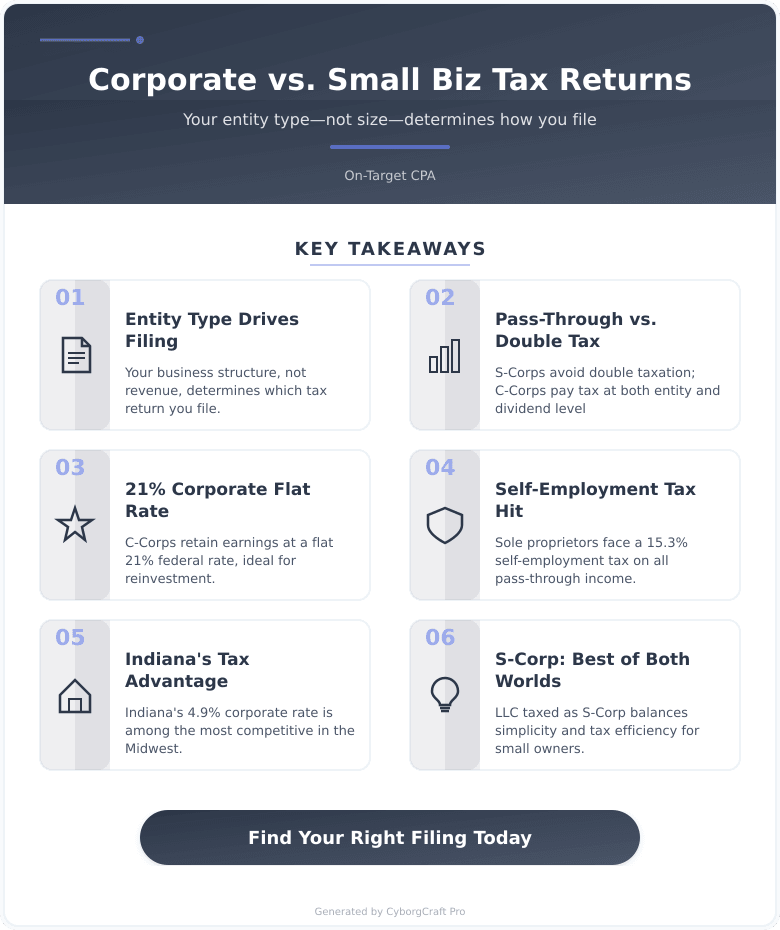
Choosing the wrong tax return type is one of the most common and costly mistakes Indiana business owners make. Your entity structure – not your revenue or headcount – determines whether you file a corporate return like Form 1120 or a pass-through return like Schedule C or Form 1065. C-Corps pay tax at the entity level at a flat 21% federal rate, but face double taxation on dividends. S-Corps and sole proprietors use pass-through treatment, meaning income flows to the owner’s personal return. Indiana’s 4.9% corporate tax rate is competitive compared to Illinois, Michigan, Ohio, and Kentucky, but still requires a separate state filing. LLCs are especially confusing because their tax treatment depends entirely on IRS elections made at formation or later. Key 2025 deadlines include March 17 for S-Corps and partnerships, and April 15 for C-Corps and sole proprietors. Filing the wrong form can trigger audits, missed deductions, and penalties. The post walks through a practical action plan, a document checklist, and a clear comparison of each entity type, form, and estimated preparation cost – giving Indianapolis business owners the clarity they need before tax season gets away from them.